
The Imposter Fraud Index: which UK sectors face the most Right to Work fraud?
Hospitality tops TrustID’s 2026 imposter fraud index, while cleaning and facilities management records the highest number of attempts per 100 customers.
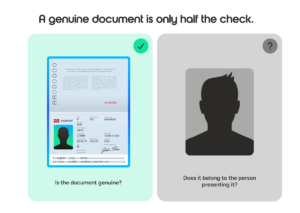
A passport can be genuine. A Home Office share code can be valid. But what if the person presenting it isn’t who they say they are?
That’s the challenge of imposter fraud – and new TrustID research reveals which sectors are encountering it most.
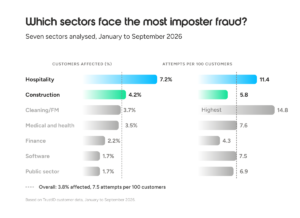
Between January and September 2026, 7.2% of TrustID’s hospitality customers experienced at least one imposter-related fraud attempt, compared with 3.8% across the seven sectors analysed.
Construction followed at 4.2%, while cleaning and facilities management recorded the highest number of attempts relative to its customer base.
So, what’s behind the findings, and what can employers do to protect their recruitment processes?
Key takeaways
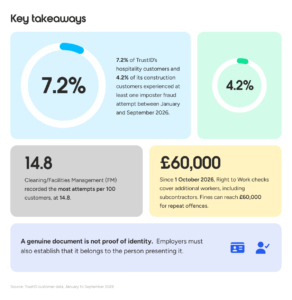
- 7.2% of TrustID’s hospitality customers and 4.2% of its construction customers experienced at least one imposter fraud attempt between January and September 2026.
- Cleaning/Facilities Management (FM) recorded the most attempts per 100 customers, at 14.8.
- Since 1 October 2026, Right to Work checks cover additional workers, including subcontractors. Fines can reach £60,000 for repeat offences.
- A genuine document is not proof of identity. Employers must also establish that it belongs to the person presenting it.
What is imposter fraud in a Right to Work check?
Imposter fraud happens when someone presents genuine evidence, such as a passport or Home Office share code, that belongs to another person. The document is real, but the person holding it is not the person it belongs to. The Right to Work changes that came into force on 1 October 2026 widened the scope of who employers must check, so getting these checks right is of crucial importance across every sector.
Christie Lewis, Operations Director at TrustID, says: “One of the biggest misconceptions around identity fraud is that it always involves fake documents. In reality, an individual can present completely genuine evidence that belongs to someone else.”
Which sectors face the most imposter fraud?
TrustID analysed seven sectors between January and September 2026. Hospitality had the highest share of customers affected, and Construction came in second place. Cleaning/FM had the highest number of attempts per 100 customers. These figures reflect TrustID’s customers, not each sector as a whole.
Why are Right to Work checks harder in hospitality?
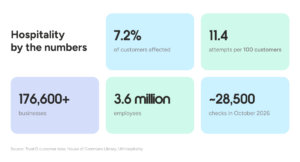
Around one in 14 of TrustID’s hospitality customers experienced an imposter fraud attempt, and 11.4 attempts were recorded per 100 customers, as some were hit more than once.
The Hospitality sector is one of the largest in the UK. The House of Commons Library counted over 176,600 hospitality businesses in March 2025, and UKHospitality says it employs 3.6 million people. High staff turnover, seasonal demand, and fast recruitment make manual checks time-consuming, and the option for substitute workers adds another complication.
Christie Lewis explains: “Hospitality businesses often need to recruit large numbers of people within relatively short timeframes, particularly during peak trading periods, and often across many different sites.”
In October 2026 alone, TrustID completed almost 28,500 Right to Work checks for restaurant chains, hotel staff, and recruitment agencies placing into hospitality. Enquiries from hospitality businesses rose 35% between 2025 and 2026.
Why are Right to Work checks harder in construction?
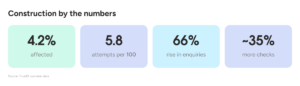
Construction comes second in the index, with 4.2% of TrustID’s customers experiencing at least one imposter fraud attempt. The sector recorded 5.8 attempts per 100 customers.
It’s easy to see why consistent checking can be challenging for construction businesses. Workforces are spread across sites, and projects often involve several employers, subcontractors and recruitment providers, plus substitute workers. Short-notice hiring adds to the pressure. GOV.UK recorded 846,000 SMEs in construction in 2026, and there are reportedly 2.1 million workers in the sector.
Christie Lewis says: “The 1 October Right to Work changes add another layer of complexity, particularly for organisations relying on subcontracted labour, as the new requirements mean Right to Work checks must now be completed for additional workers, which includes subcontractors.”
TrustID’s own figures also point to growing interest in verification within the construction industry.
Enquiries from construction businesses rose 66% between 2025 and 2026, the sharpest increase of any sector. Right to Work checks for construction and technical organisations, and those recruiting into them, were almost 35% higher in October 2026 than in October 2025.
What does Cleaning and Facilities Management show about repeat attempts?
Only 3.7% of cleaning and facilities management customers were affected, yet the sector logged 14.8 attempts per 100 customers, the highest of any sector. That is about four attempts for each affected business, against roughly 1.6 in hospitality and 1.4 in construction. This suggests that while fewer cleaning and facilities management customers encountered imposter fraud, those affected experienced more attempts on average.
What changed for employers on 1 October 2026?
Under the Border Security, Asylum and Immigration Act 2025 (BSAIA), Right to Work requirements extend to more workers, including those supplied through subcontracting arrangements.
Employers face fines of up to £60,000 for unknowingly employing, or unlimited fines and prison time, for knowingly employing illegal workers. TrustID’s guide, “Right to Work changes are now live: are you prepared?”, covers the details.
How can employers reduce the risk of imposter fraud?
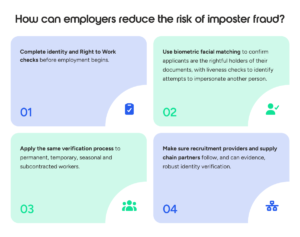
TrustID’s digital Right to Work checks combine document validation, biometric facial matching and liveness checks. Explore TrustID’s Right to Work checks or read more about the Right to Work guidance.
FAQs
Which sector has the most imposter fraud attempts?
Among TrustID’s customers, hospitality had the highest share affected (7.2%) between January and September 2026. Construction came in second place (4.2%). Cleaning/FM had the most attempts per 100 customers (14.8).
Is checking a passport enough for a Right to Work check?
No. Employers must check the evidence is authentic and also establish that it belongs to the person presenting it.
Do the 1 October 2026 changes apply to subcontractors?
Yes. The Right to Work requirements now extend to additional workers, including subcontractors. Businesses need to understand where responsibility for checks sits across their supply chain.
What is the penalty for employing someone illegally?
For unknowingly employing someone without the Right to Work in the UK, employers face £45,000 for first offences, or £60,000 for repeat offences.
For knowingly employing someone without a valid Right to Work, employers face unlimited fines or up to five years in prison.
What is a liveness check?
A liveness check helps identify attempts to impersonate another person. TrustID uses it alongside biometric facial matching to confirm that an applicant is the rightful holder of their documents.
Sign up to receive updates
Receive notifications from TrustID direct to your inbox. Simply fill out your email address in the form below.
Want to find out more?
We’d be really happy to chat through your requirements and offer advice on the best service for your business.
Tel: 0118 466 0822 or email us.
Request a callback